Mar 30 2026 09:07h
What That White Powder on Basement Walls Really Means (And Why You Shouldn’t Ignore It)
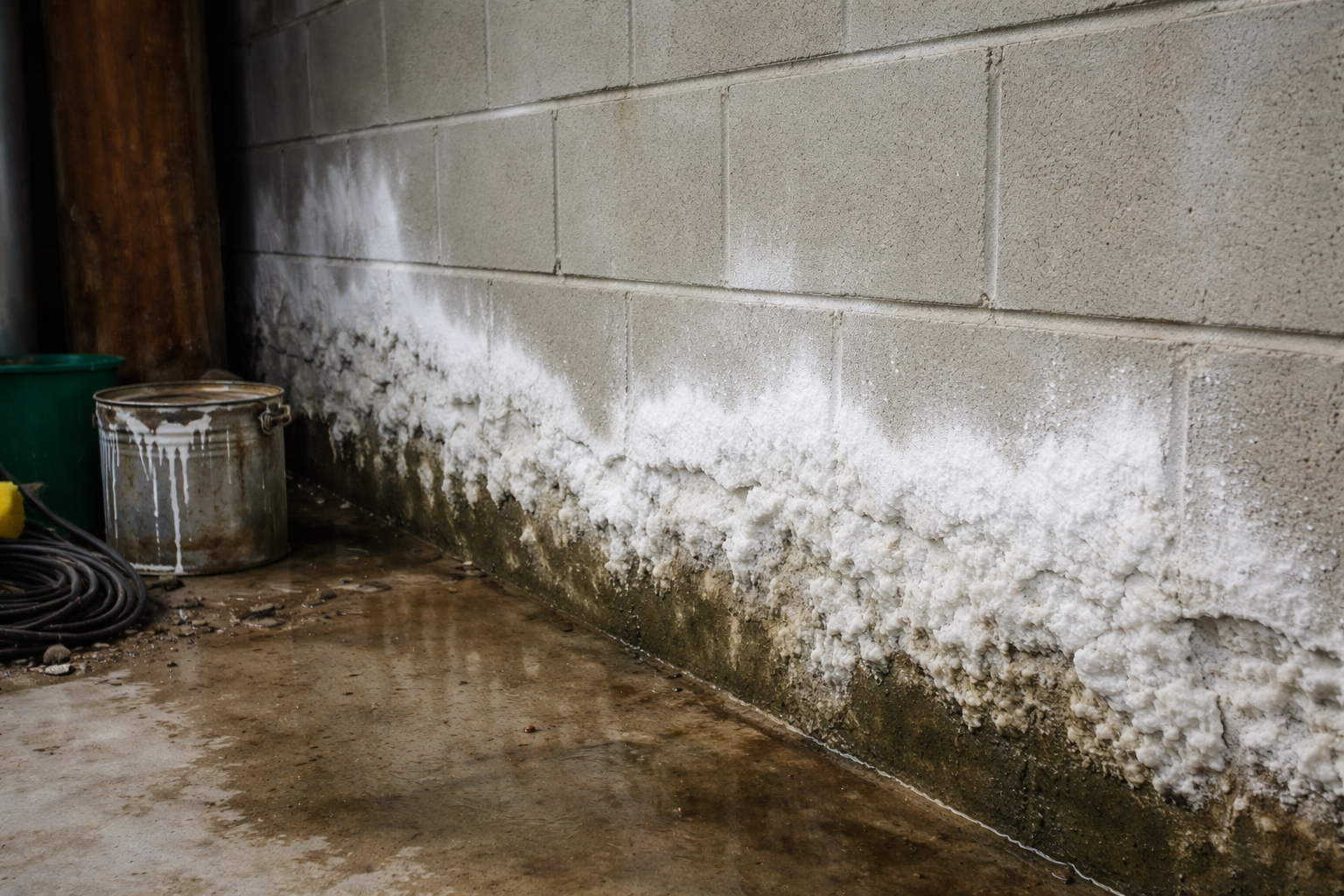
If you’ve noticed a white, chalky substance on your basement walls, you’re not alone. Many homeowners in New Jersey see this and assume it’s mold—but in most cases, it’s something called efflorescence.
While it may seem harmless, this white powder is actually a warning sign of moisture problems in your home. Understanding what it means can help you prevent serious issues like mold growth, water damage, and structural deterioration.
What Is the White Powder on Basement Walls?
The white powder you see is called efflorescence. It forms when water moves through concrete or masonry, carrying dissolved salts to the surface. As the water evaporates, it leaves behind a white, powdery residue.
Efflorescence is very common in basements in New Jersey, especially in older homes or properties with high humidity and poor drainage.
Why Efflorescence Is a Sign of Moisture Problems
While efflorescence itself is not mold and is not harmful, it indicates that moisture is entering your foundation walls.
This moisture can come from:
- Groundwater pressure
- Poor exterior drainage
- Foundation cracks
- High indoor humidity
- Water intrusion after heavy rain
If left unaddressed, these moisture issues can lead to hidden mold growth, basement mold problems, and water damage.
Efflorescence vs Mold: What’s the Difference?
Many homeowners confuse efflorescence with mold. Knowing the difference is important.
Efflorescence:
- White, chalky or powdery
- Dry and easily brushed off
- Found on concrete or masonry
- Caused by water and salt deposits
Mold:
- Usually black, green, or brown
- Fuzzy or slimy texture
- Spreads and grows over time
- Caused by moisture and organic material
If you’re unsure, a professional mold inspection in New Jersey can help determine whether you’re dealing with mold or a moisture issue.
Why You Shouldn’t Ignore Efflorescence
Efflorescence is not the problem—it’s a symptom of a bigger issue.
Ignoring it can lead to:
- Mold growth in basements
- Structural damage to foundation walls
- Increased humidity levels
- Poor indoor air quality
- Costly future repairs
In many cases, homeowners call for mold remediation after the problem has already progressed.
How Efflorescence Leads to Mold Growth
Moisture is the key factor in mold growth. When water enters your basement walls, it creates an environment where mold can thrive—especially in hidden areas like:
- Behind drywall
- Under flooring
- Inside wall cavities
- Around baseboards
This is why moisture control is essential in preventing mold problems.
How to Prevent Moisture and Mold in Basements
If you notice efflorescence, it’s important to address the source of moisture.
Here are some effective steps:
- Improve exterior drainage around your home
- Repair foundation cracks
- Install or use dehumidifiers
- Ensure proper ventilation in basement areas
- Address water intrusion immediately
- Schedule a professional mold inspection and moisture assessment
Taking action early can prevent the need for costly mold remediation services in New Jersey.
When to Call a Professional
If you see recurring efflorescence, musty odors, or signs of moisture, it’s best to consult a professional.
At M&N Restoration LLC, we provide expert:
- Mold inspection New Jersey
- Mold remediation NJ
- Moisture detection services
- Water damage restoration
- Basement mold removal
We help homeowners identify the root cause of moisture problems and prevent mold from developing or returning.
Final Thoughts
That white powder on your basement walls may not be mold—but it’s a clear sign that moisture is present in your home.
Addressing the issue early can help you avoid serious problems like mold growth, water damage, and structural issues. At M&N Restoration LLC, we help homeowners across New Jersey identify basement moisture problems and provide professional mold remediation and mold inspection services to prevent mold growth.
If you’re unsure what you’re dealing with, a professional evaluation can give you peace of mind.
Frequently Asked Questions
What is the white powder on basement walls?
The white powder is called efflorescence. It forms when water moves through concrete and leaves behind salt deposits as it evaporates.
Is efflorescence dangerous?
Efflorescence itself is not harmful, but it indicates moisture problems that can lead to mold growth and structural damage.
Can efflorescence turn into mold?
Efflorescence does not turn into mold, but the moisture causing it can create conditions where mold can grow.
How do I get rid of efflorescence?
You can clean the surface, but the key is fixing the moisture source. Without addressing the cause, it will return.
When should I call a mold remediation company?
If you notice musty odors, visible mold, or ongoing moisture issues, it’s best to contact a professional mold remediation company.