Mar 02 2026 07:04h
What Happens If Mold Is Not Professionally Removed in New Jersey?
Mold growth is a common problem after water damage, roof leaks, basement flooding, or high indoor humidity. But what happens if mold is not professionally removed?
Untreated mold can spread quickly, damage structural materials, impact indoor air quality, and lead to significantly higher repair costs. For homeowners in Passaic, Bergen, Morris, and Somerset Counties, understanding the risks of delaying professional mold remediation is critical.
Professional mold remediation in New Jersey is designed to identify the moisture source, contain contamination, and safely remove affected materials to prevent further damage.
How Mold Spreads When Professional Mold Remediation Is Not Performed
Mold spores travel easily through the air. Without proper containment and professional mold removal, mold can spread beyond the visible area into:
-
Drywall and insulation
-
Subflooring and framing
-
Crawl spaces
-
Attics
-
HVAC systems
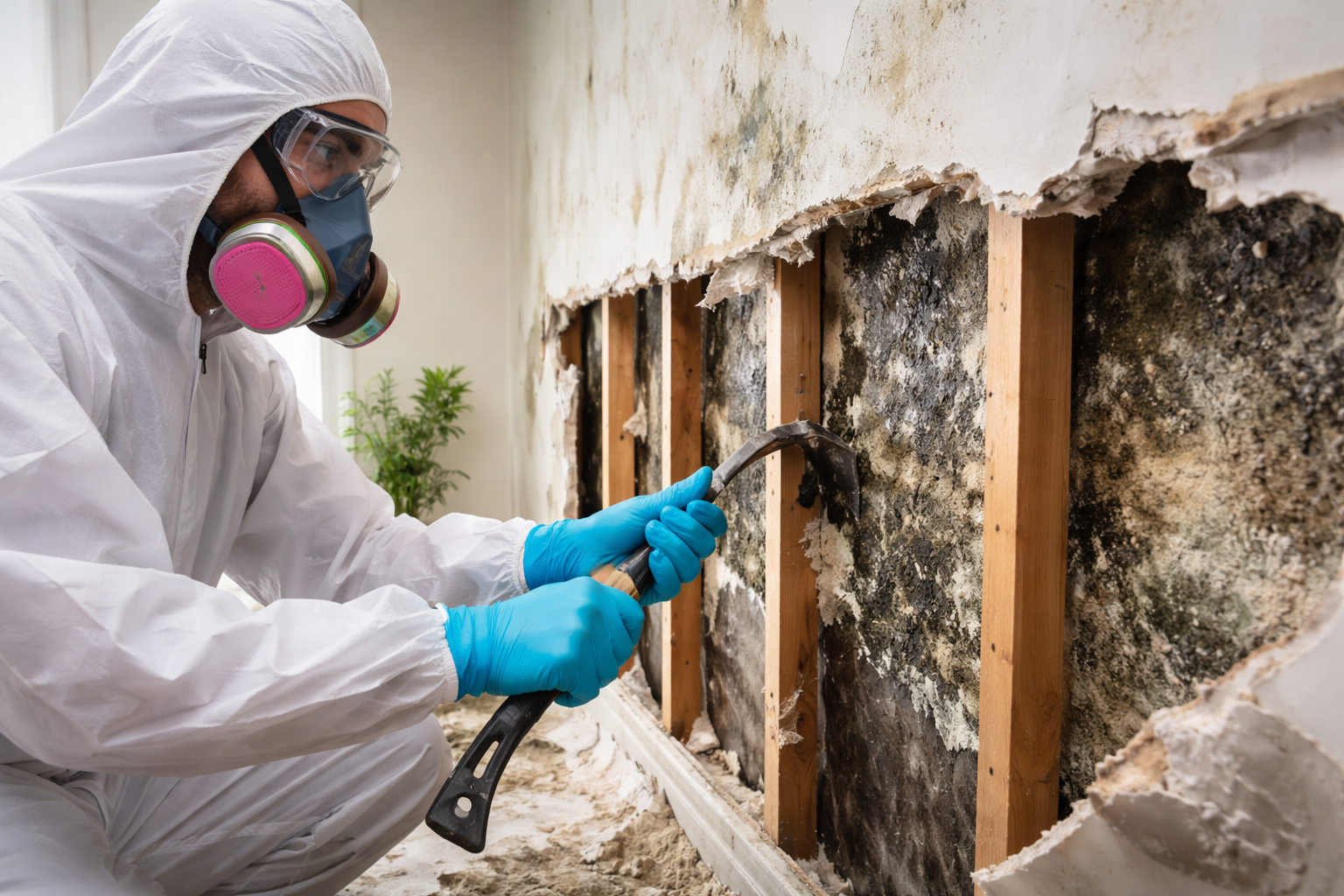
Surface cleaning alone does not eliminate hidden mold growth. Professional mold remediation includes containment barriers, HEPA air filtration, moisture detection, and safe removal of contaminated materials.
When mold is not professionally removed, cross-contamination to unaffected areas becomes a serious concern.
Structural Damage Caused by Untreated Mold Growth
Mold feeds on organic materials such as wood, drywall, and insulation. Over time, untreated mold growth can weaken:
-
Wall framing
-
Ceiling joists
-
Subfloors
-
Foundation walls
-
Structural supports
What begins as a small moisture issue can escalate into major structural water damage. The longer mold remediation is delayed, the more invasive and expensive repairs become.
How Mold Affects Indoor Air Quality in Your Home
When mold is left untreated, airborne mold spores increase throughout the property. This can lead to:
-
Persistent musty odors
-
Ongoing microbial contamination
-
Spread of mold to additional rooms
-
Reduced indoor air quality
Professional mold inspection and mold remediation services help restore safe indoor air conditions by removing contaminated materials and addressing the moisture source.
Why DIY Mold Removal Often Leads to Recurring Mold Problems
Many homeowners attempt DIY mold removal using household cleaners or over-the-counter products. While this may remove visible staining, it often fails to address:
-
Hidden moisture behind walls
-
Mold growth inside insulation
-
Improper containment
-
Incomplete structural drying
Without professional moisture mitigation and structural drying, mold frequently returns within weeks or months.
Certified mold remediation ensures that both the mold and the underlying water damage are properly addressed.
Why Delaying Mold Remediation Increases Repair Costs
Postponing professional mold remediation can significantly increase overall project costs. Small affected areas can expand into:
-
Extensive drywall removal
-
Flooring replacement
-
Insulation removal
-
Framing repairs
-
Larger containment setups
Early intervention by a professional mold remediation company reduces damage and minimizes disruption to your home or business.
Benefits of Professional Mold Remediation in New Jersey
Professional mold remediation in North Jersey includes:
-
Comprehensive mold inspection
-
Moisture assessment and leak detection
-
Containment of affected areas
-
HEPA air filtration
-
Safe removal of contaminated materials
-
Structural drying
-
Ventilation and moisture control recommendations
M&N Restoration LLC provides professional mold removal, black mold remediation, and water damage restoration services throughout Passaic, Bergen, Morris, and Somerset Counties.
If you suspect mold growth in your home or commercial property, contact M&N Restoration LLC at 973-883-5645 for expert mold remediation in New Jersey.
Frequently Asked Questions (FAQ)
1. What happens if mold is left untreated?
If mold is not professionally removed, it can continue spreading behind walls and under flooring, causing structural damage and worsening indoor air quality.
2. How quickly does mold grow after water damage?
Mold can begin growing within 24–48 hours after water intrusion, especially in humid environments or after basement flooding.
3. Can mold spread to other rooms in the house?
Yes. Mold spores travel through air currents and HVAC systems, which can cause contamination in multiple areas if proper containment is not used.
4. Is DIY mold removal effective?
DIY mold removal may address surface mold but often fails to eliminate hidden contamination or resolve moisture issues. Professional mold remediation is recommended for lasting results.
5. Do I need professional mold remediation in New Jersey?
If mold covers a large area, returns repeatedly, or results from water damage, professional mold remediation services are strongly recommended to prevent further damage.