Mar 16 2026 10:33h
The Most Common Places Mold Hides in Homes (And Why Homeowners Miss It)
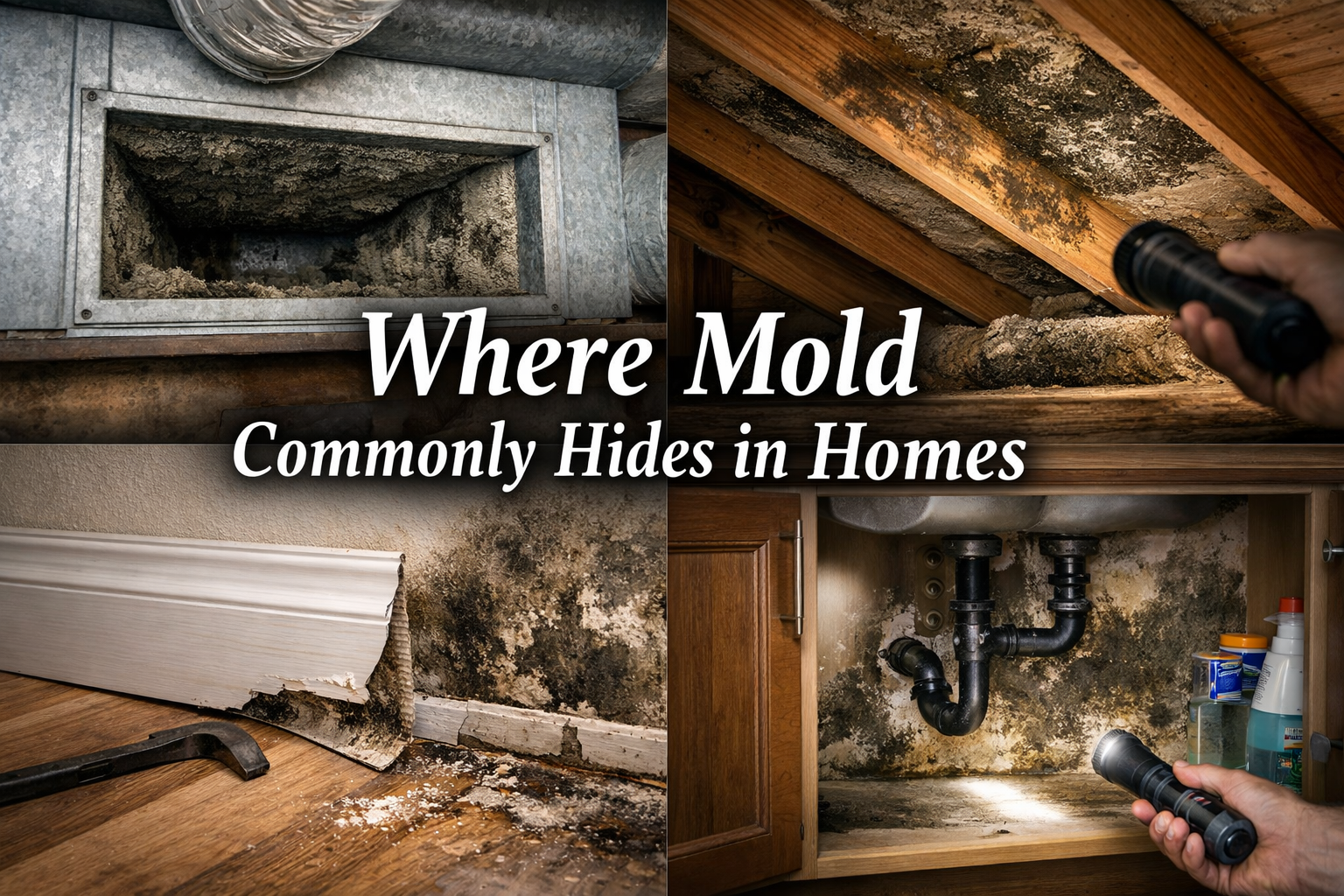
Mold problems in homes are not always obvious. While many homeowners expect mold to appear on visible surfaces like walls or ceilings, mold often develops in hidden areas where moisture collects and airflow is limited. Because these areas are out of sight, mold growth can continue for weeks or even months before it is discovered.
Understanding where mold commonly hides in homes can help homeowners identify problems early and prevent serious damage to their property and indoor air quality.
In many homes throughout New Jersey, mold growth is often linked to moisture problems, water damage, high humidity, or hidden leaks.
Why Mold Often Grows in Hidden Areas
Mold requires only three conditions to grow: moisture, organic material, and limited airflow. Many building materials—such as drywall, wood, insulation, and carpeting—provide ideal surfaces for mold growth.
Hidden areas in homes often trap moisture from small leaks, condensation, or humidity. Because these areas are rarely inspected, mold can spread without being noticed.
Common causes of hidden mold include:
-
Plumbing leaks
-
Roof leaks
-
Basement moisture
-
Flood or water damage
-
Poor ventilation
-
High humidity levels
When these moisture issues are not addressed quickly, mold can develop behind surfaces and remain undetected.
Behind Baseboards and Drywall
One of the most common places mold hides is behind baseboards and drywall. Small plumbing leaks, condensation, or water intrusion can allow moisture to collect inside wall cavities.
Because drywall and wood trim absorb moisture easily, mold can begin growing behind the wall before any visible signs appear.
Warning signs may include:
-
Musty odors
-
Peeling paint
-
Warped baseboards
-
Soft drywall
-
Small stains along walls
Professional mold inspection and moisture detection tools are often needed to identify mold inside walls.
Under Flooring and Carpeting
Another common location for hidden mold is under flooring materials, especially in basements or areas affected by water damage.
Moisture can become trapped beneath:
-
Carpet and padding
-
Laminate flooring
-
Vinyl flooring
-
Wood flooring
When moisture remains under these materials, mold can grow unnoticed. In many cases, homeowners may only notice a persistent musty smell before visible mold appears.
Inside HVAC Systems and Air Ducts
Heating and cooling systems can also become a source of hidden mold growth. HVAC systems collect condensation, which can create damp conditions inside ductwork or air handlers.
Mold growth in HVAC systems can spread spores throughout the home, affecting indoor air quality.
Signs of mold in HVAC systems include:
-
Musty odors when the system runs
-
Visible mold around vents
-
Increased allergy symptoms indoors
Routine HVAC maintenance and humidity control can help prevent mold growth in these systems.
Behind Cabinets and Appliances
Kitchens and bathrooms are particularly vulnerable to mold growth because of frequent water use and humidity.
Mold may develop behind:
-
Kitchen cabinets
-
Bathroom vanities
-
Refrigerators
-
Dishwashers
-
Washing machines
Slow leaks from plumbing connections can create damp areas that remain hidden for long periods.
Inside Attics and Roof Spaces
Attics are another area where mold can grow without being immediately noticed. Poor ventilation, roof leaks, and condensation can create the perfect environment for mold growth.
Common causes of attic mold include:
-
Improper ventilation
-
Roof leaks
-
Bathroom vents terminating in the attic
-
High humidity levels
Regular attic inspections can help prevent mold problems from spreading.
Basements and Crawl Spaces
Basements are one of the most common locations for mold growth in homes, especially in areas with high humidity or poor drainage.
Moisture from foundations, groundwater intrusion, or condensation can create ideal conditions for mold growth.
Common basement mold causes include:
-
Poor drainage around the home
-
High humidity levels
-
Foundation cracks
-
Flooding or water damage
Using dehumidifiers and proper waterproofing solutions can help reduce moisture and prevent mold problems.
How Homeowners Can Prevent Hidden Mold
Preventing mold growth is largely about controlling moisture and maintaining proper ventilation.
Homeowners can reduce mold risks by:
-
Fixing plumbing leaks quickly
-
Keeping indoor humidity below 60%
-
Using dehumidifiers in basements
-
Ensuring proper ventilation in bathrooms and kitchens
-
Inspecting areas after water damage
-
Scheduling professional mold inspections when problems are suspected
Early detection and proper moisture control can significantly reduce the risk of mold spreading inside a home.
When to Call a Professional Mold Remediation Company
If mold continues to appear, spreads throughout multiple areas, or develops after water damage, professional assistance may be necessary.
Professional mold remediation companies can identify hidden moisture sources, contain affected areas, and safely remove mold contamination.
At M&N Restoration LLC, we provide professional mold inspection, mold remediation, moisture detection, and water damage restoration services throughout New Jersey. Our goal is not only to remove mold but also to address the underlying conditions that allow mold to grow.
Frequently Asked Questions
Where does mold usually hide in homes?
Mold often hides behind drywall, under flooring, inside HVAC systems, behind cabinets, in attics, and in basements where moisture accumulates.
Can mold grow behind walls without visible signs?
Yes. Mold can grow inside wall cavities for long periods before visible signs appear. Musty odors and moisture problems are often early indicators.
How can I tell if mold is hidden in my home?
Common signs include musty smells, peeling paint, water stains, warped materials, and increased allergy symptoms indoors.
How quickly can mold grow after water damage?
Mold can begin growing within 24–48 hours if building materials remain wet.
Should hidden mold be removed by professionals?
Yes. Professional mold remediation ensures proper containment, removal, and moisture control to prevent mold from spreading.