Jan 28 2026 04:16h
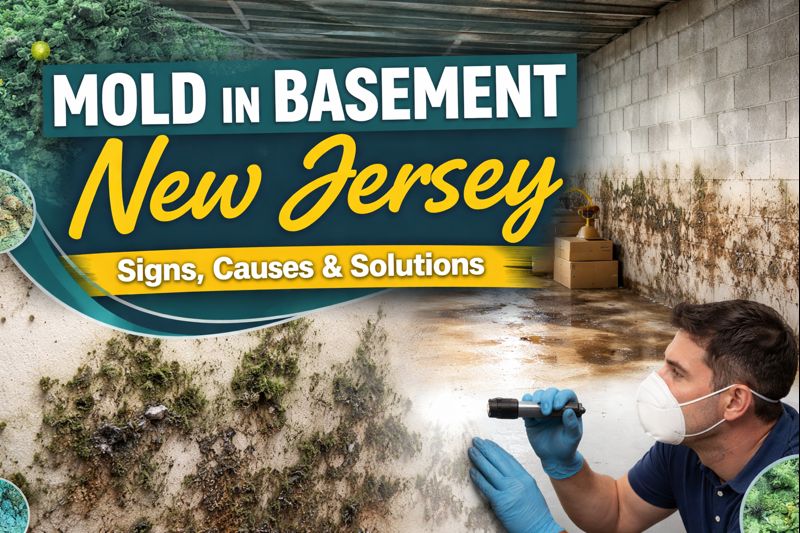
Mold in basement in New Jersey
Introduction: Basement Mold in New Jersey—Why It Happens So Often
If you own a home in New Jersey, your basement is one of the most common places for mold to show up—often before you ever see it. Between humid summers, wet winters, heavy rain, and older foundations, basements can trap moisture and create the perfect environment for mold growth. The problem isn’t just cosmetic: mold can impact indoor air quality, trigger allergy-like symptoms, and damage materials like drywall, wood framing, and insulation. Below are the top 7 signs of basement mold in NJ homes—and what to do next..
1. Musty Basement Smell That Keeps Coming Back
A basement that smells musty, earthy, or “damp” is one of the earliest warnings of mold—even if you don’t see any spots. This odor can come from hidden growth behind finished walls, under flooring, inside insulation, or around stored items like cardboard boxes and fabric.
💡 Pro Tip: If the smell gets worse after rain or when your AC runs, there’s a good chance moisture is feeding mold somewhere in the basement.
2. Visible Mold on Joists, Drywall, or Stored Items
Basement mold isn’t always “black mold.” You may notice white, green, gray, or dark staining on wood joists, drywall, concrete walls, or around basement windows. Mold also loves anything porous—like cardboard boxes, rugs, furniture, and clothing.
-
Look along the rim joist and sill plate (where foundation meets framing)
-
Check corners behind shelves and storage bins
-
Inspect around basement windows and door frames
🛑 Don’t “wipe and forget” mold—if moisture isn’t fixed, it will return (often faster).
3. Damp Walls, Wet Floors, or Water Marks After Rain
In NJ, a common basement mold trigger is water intrusion—even small leaks. If you see damp patches, puddles, staining, or “tide lines” on walls, moisture is entering somewhere and can quickly lead to mold growth behind finishes.
-
Water stains along the bottom of walls
-
Wet spots near sump pumps or floor drains
-
Dark marks around cracks in foundation walls or floors
4. Peeling Paint, Bubbling Walls, or Warped Baseboards
When moisture builds up inside basement walls, you’ll often see paint bubbling, peeling, cracking, or warped trim. This is a strong sign that the wall materials are staying damp—creating the perfect conditions for mold growth behind the surface.
✅ Tip: Fresh paint doesn’t “fix” mold or moisture. If the wall is damp, mold can keep growing underneath.
5. Condensation on Pipes, Ductwork, or Basement Windows
If your basement has “sweating” pipes, water beads on ductwork, or constant window condensation, humidity is likely too high. That moisture drips onto surfaces and fuels mold—especially near HVAC lines, water heaters, washers/dryers, and uninsulated plumbing.
🌡️ Humidity Goal: Keep basement relative humidity below 50% (ideally 35–50%).
6. Efflorescence (White Powder) on Basement Walls
Efflorescence is a white, chalky, powder-like residue on concrete or masonry. It’s not mold—but it’s a major red flag. It means water is moving through your foundation and evaporating, leaving minerals behind. Where there’s repeated moisture, mold is often close by (especially on nearby wood or drywall).
🔍 Pro Tip: If you see efflorescence plus a musty smell, you may have both moisture intrusion and hidden mold.
7. Allergy-Like Symptoms That Flare Up in the Basement
Basement mold can release spores into the air, which may lead to symptoms—especially for kids, seniors, and anyone with asthma or allergies. Watch for symptoms that worsen when you’re in the basement or after spending time downstairs:
-
Sneezing or congestion
-
Coughing or throat irritation
-
Itchy eyes
-
Headaches or a “stuffy” feeling
-
Asthma flare-ups
🧬 Important: Symptoms don’t confirm mold—but they’re a strong reason to schedule an inspection if you also have moisture or odor issues.
What to Do If You Suspect Mold in Your NJ Basement
If you notice one or more signs above, don’t ignore it. Basement mold usually means there’s an underlying moisture problem—leaks, humidity, drainage issues, or poor ventilation. The faster you address it, the easier (and less expensive) it is to fix.
✅ Your Next Steps:
-
Identify the moisture source – Check for leaks, seepage after rain, sump pump issues, or excessive humidity.
-
Avoid disturbing visible mold – Scrubbing or tearing materials can release spores into the air.
-
Schedule a professional mold inspection/remediation – Proper containment, filtration, removal, and prevention matter—especially for finished basements.
Why Choose Professional Basement Mold Remediation?
At MN Restoration, we provide professional mold remediation services in New Jersey with a focus on stopping mold at the source—not just cleaning what you can see. Our process can include:
-
Basement mold inspection and moisture assessment
-
Containment and air filtration (to limit spore spread)
-
Safe removal of affected materials and deep cleaning
-
Moisture control recommendations to help prevent return
📞 Call us today at 973-883-5645 or email us at mnrestorationnj@gmail.com to schedule your free mold assessment.
Conclusion
Basement mold in New Jersey is common—but it’s never “normal.” If you’re noticing musty smells, damp walls, condensation, or visible staining, take action early. The sooner you find the moisture source and address the mold properly, the better you’ll protect your home, your basement, and your indoor air quality.