Feb 16 2026 06:04h
Is That Black Mold or Just Dirt? How Homeowners in Wayne, Fairfield & Ridgewood Can Tell the Difference
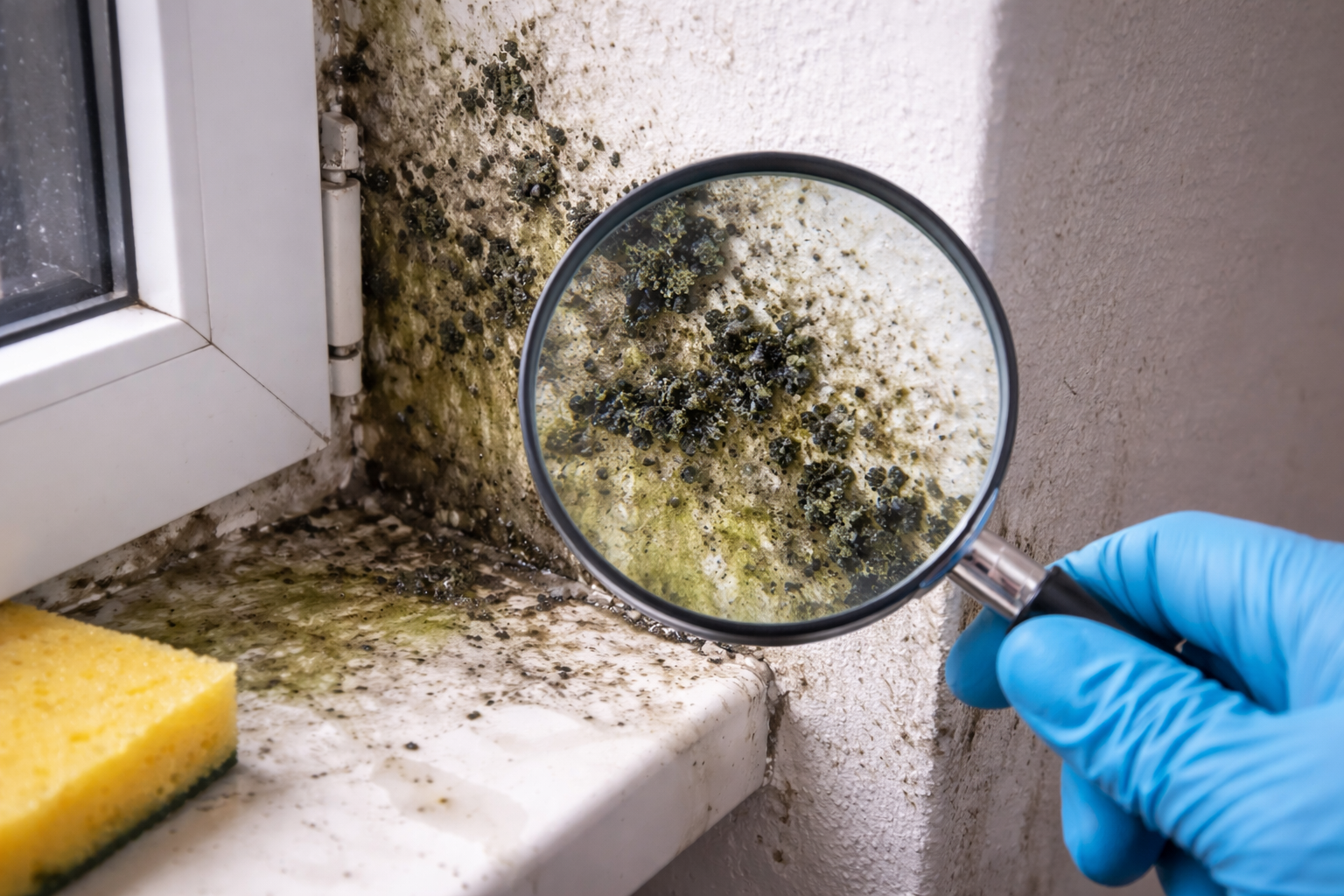
If you’ve noticed dark spots on your walls, ceiling, or basement, you may be wondering:
Is this black mold — or just dirt?
Homeowners in Wayne, Fairfield, Ridgewood, Morristown, Englewood, Caldwell, Summit, Plainfield, Upper Saddle River, and Pompton Plains often discover dark staining after water damage, basement flooding, or high humidity.
Not every dark spot is toxic black mold — but ignoring it can lead to serious structural damage and indoor air quality issues.
Here’s how to tell the difference and when to call a professional mold inspection company in New Jersey.
What Is Black Mold?
“Black mold” usually refers to Stachybotrys chartarum, a mold that grows in damp areas with prolonged moisture.
It commonly appears after:
-
Basement flooding in Wayne or Fairfield
-
Roof leaks in Ridgewood
-
Burst pipes in Morristown
-
Bathroom humidity issues in Englewood
-
Storm damage in Summit or Plainfield
Mold can begin growing within 24–48 hours after water exposure.
Black Mold vs. Dirt: Key Differences
1. Growth Pattern
Mold:
-
Spreads outward
-
Looks patchy or circular
-
May appear fuzzy or slimy
Dirt:
-
Looks flat and dry
-
Doesn’t expand over time
If the stain continues growing, you likely need professional mold remediation in NJ.
2. Location
Black mold commonly appears in:
-
Basements in Fairfield & Wayne
-
Crawl spaces in Ridgewood
-
Behind drywall after leaks
-
Around windows and HVAC systems
-
Under sinks and near plumbing
If the area has a history of water damage, mold is much more likely.
3. Odor
Mold produces a musty smell similar to damp earth.
If your home in Morristown, Caldwell, or Upper Saddle River smells musty, a mold inspection may be necessary — even if you don’t see visible growth.
4. Cleaning Reaction
Dirt wipes away completely.
Mold may smear, lighten, or return quickly after cleaning.
Important: Bleach does NOT eliminate mold inside drywall or wood. It only treats surface staining.
Why DIY Mold Removal Often Fails
Improper cleaning can:
-
Spread mold spores
-
Contaminate other rooms
-
Miss hidden moisture
-
Cause recurring mold growth
Professional mold remediation in Wayne, Fairfield, Ridgewood, and surrounding NJ towns includes:
-
Containment barriers
-
HEPA air filtration
-
Moisture detection
-
Safe removal
-
Structural drying
When to Call a Mold Removal Company in NJ
Contact a professional if:
-
The affected area is larger than 10 sq. ft.
-
Mold keeps returning
-
You smell mustiness but see no visible mold
-
There was recent water damage
-
Family members experience allergy-like symptoms indoors
Early intervention protects your property value and indoor air quality.
Professional Mold Inspection & Black Mold Removal in NJ
M&N Restoration LLC provides:
-
Mold inspection in Wayne, Fairfield & Ridgewood
-
Black mold removal in Morristown & Englewood
-
Basement mold remediation in Summit & Caldwell
-
Water damage restoration in Plainfield & Pompton Plains
-
24/7 emergency response across New Jersey
If you’re unsure whether you’re dealing with black mold or dirt, don’t wait.
📞 Contact M&N Restoration LLC today for professional mold remediation in NJ.
✅ FAQ SECTION (Optimized for Google Rich Results)
Frequently Asked Questions About Black Mold in NJ
Q1: How can I tell if black mold is toxic?
Most homeowners cannot visually confirm toxic mold. Professional mold testing and inspection are required to determine the species and risk level.
Q2: Does bleach kill black mold?
Bleach may lighten surface stains but does not eliminate mold roots inside porous materials like drywall or wood.
Q3: How quickly does mold grow after water damage?
Mold can begin growing within 24–48 hours after moisture exposure.
Q4: Is black mold common in NJ basements?
Yes. Due to humidity and older housing structures, black mold is common in NJ basements, especially after flooding or leaks.
Q5: Should I test for mold before removing it?
If the affected area is large or recurring, professional inspection is recommended before remediation.